Time: 25 hours, 39 minutes
Vehicle: 2016 Audi S6 (tuned to ~600 hp) with auxiliary fuel tanks
Date: May 1, 2020
Team: Arne Toman (team leader), Doug Tabbutt, Dunadel Daryoush
Average Speed: 112 mph (moving avg), 110 mph overall
Top Speed: ~175 mph
Key Advantage: COVID-19 pandemic resulted in significantly reduced traffic. Modified turbos, upgraded heat exchanger, custom tune producing ~600 hp. Car disguised as Ford Police Interceptor.
Fuel Strategy: 5 fuel stops, 31 minutes total stopped time. 67-gallon capacity (22-gal stock + 45-gal trunk cell). Over 30 spotters.
Overall Cannonball record across all fuel types — the benchmark that all future attempts are measured against.
Time: 27 hours, 25 minutes
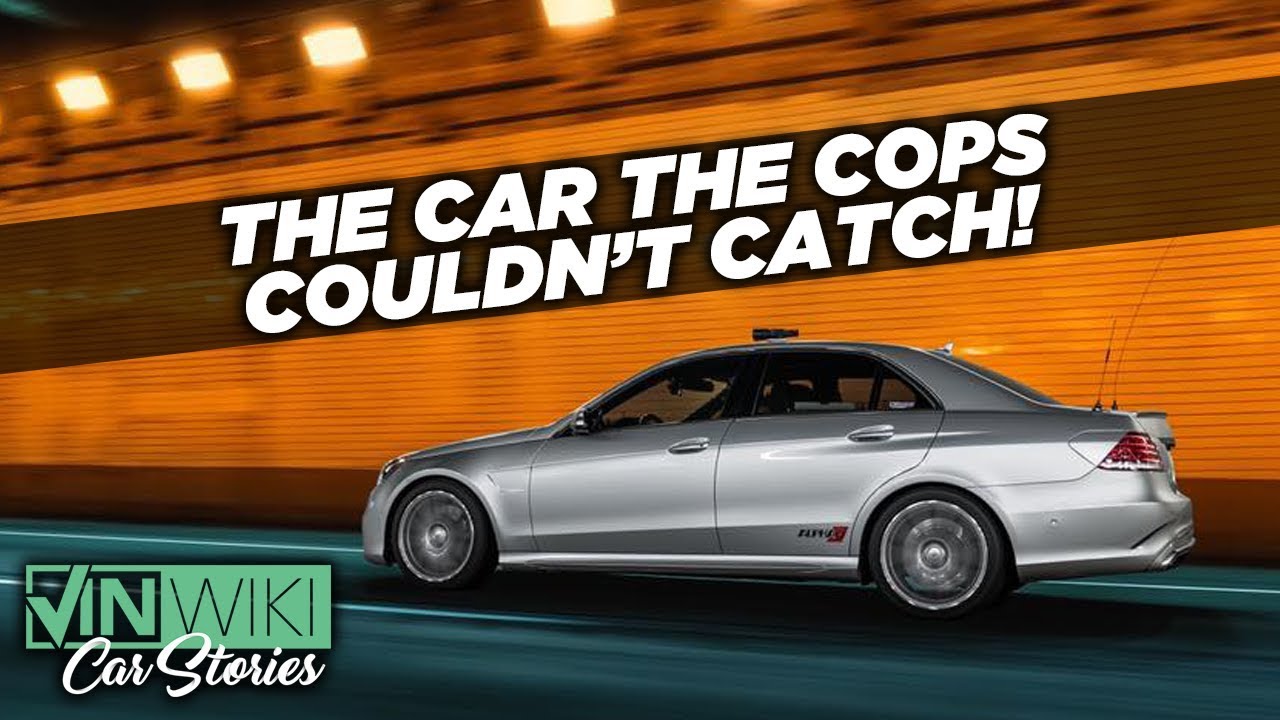
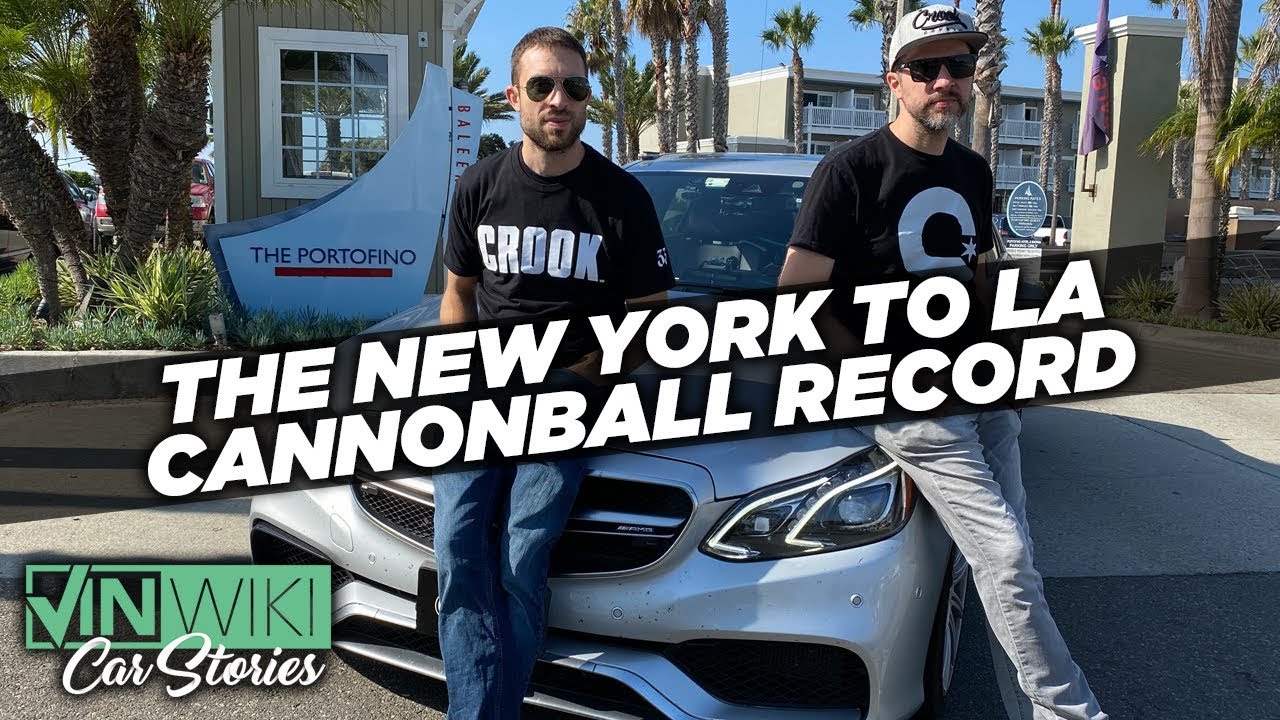
Vehicle: Mercedes-AMG E63
Date: November 2019
Team: Arne Toman, Doug Tabbutt, Berkeley Chadwick (spotter)
Previous record by the core Toman/Tabbutt team before their landmark 2020 run. This was the prevailing gas record that stood until the pandemic-assisted conditions of May 2020 allowed them to shave off nearly 2 hours.
The success of this run paved the way for their follow-up attempt in a different vehicle platform one year later.
Time: 28 hours, 50 minutes
Vehicle: Mercedes CL55 AMG · 66-gallon fuel capacity (45-gal auxiliary + 21-gal factory)
Date: October 19–20, 2013
Team: Ed Bolian (driver/leader), Dave Black, Dan Huang
Average Speed: 98 mph (100.3 mph moving average)
Fuel Strategy: 66-gallon total capacity gave ~800-mile range. Only 46 minutes total stopped time for gas, driver changes, and oil.
Notable: Bolian's meticulous planning — spotter planes, detailed fuel logistics — became the template for modern record attempts. The CL55's 5.5L supercharged V8 provided excellent power while the CL platform offered stability at high speeds.
Bolian went on to found VinWiki and became the most prominent documentarian of Cannonball history.
Time: 31 hours, 4 minutes
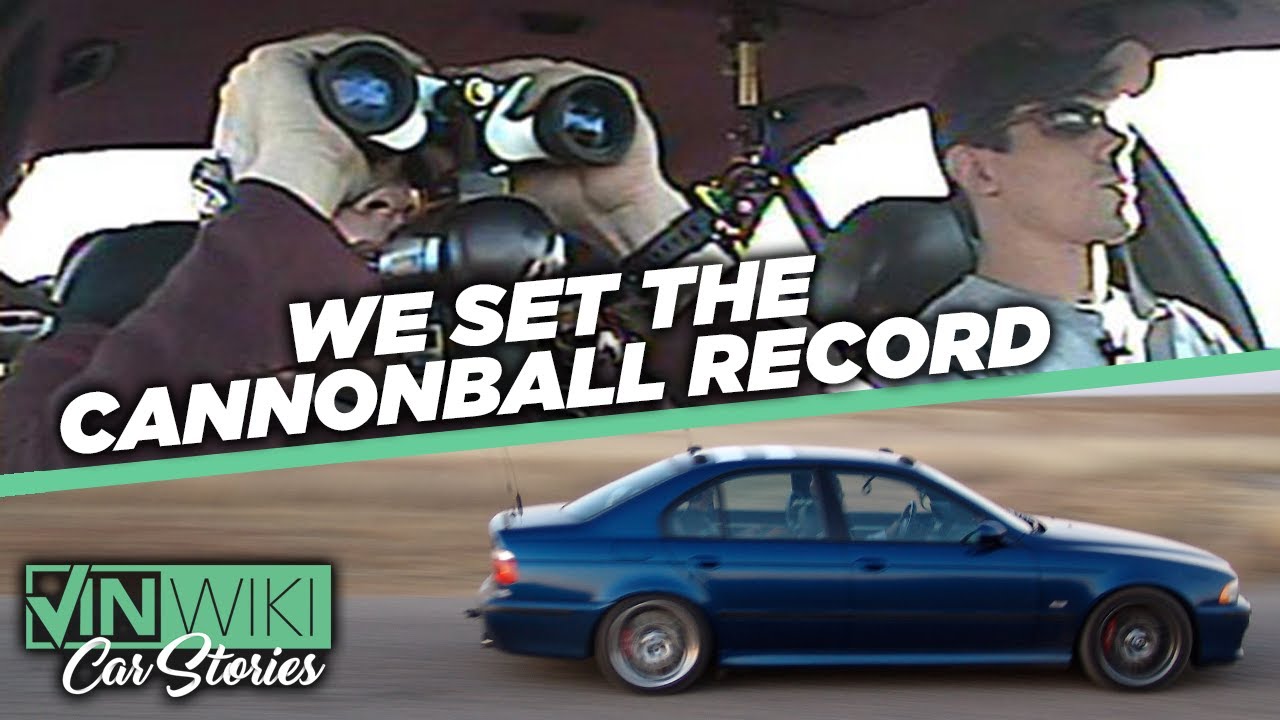
Vehicle: 2000 BMW E39 M5 · 4.9L V8 · ~400 hp (limiter removed, ~190 mph top speed)
Date: October 2006
Team: Alex Roy (primary driver), Dave Maher (navigator)
Average Speed: 91 mph across 13 states
Significance: The run that reignited modern interest in the Cannonball. Roy's "Polizei" M5 was equipped with extensive counter-detection equipment — radar detectors, laser jammers, and communications systems. Featured in the documentary APEX: The Secret Race Across America.
Roy became the public face of Cannonball running and went on to set the 2016 EV record in a Tesla Model S.
Time: 32 hours, 51 minutes
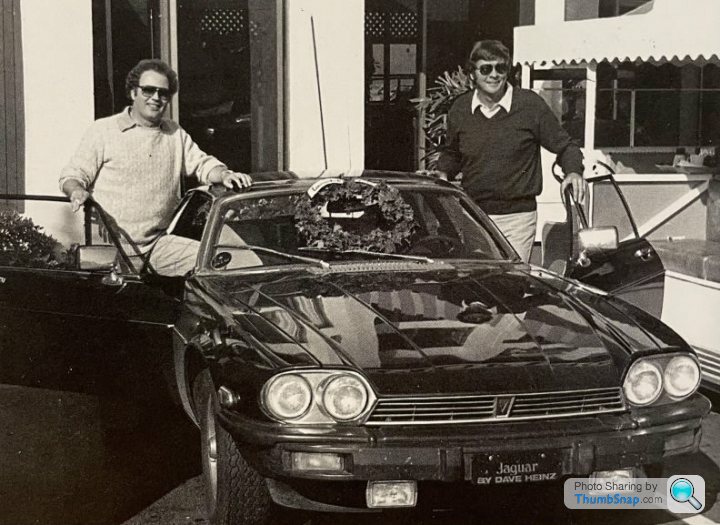
Vehicle: Jaguar XJS with V12 engine
Date: 1979
Team: Dave Heinz, Dave Yarborough
Historic Significance: Last official Cannonball Baker Sea-to-Shining-Sea Memorial Trophy Dash. This was the final sanctioned Cannonball event before the race went underground for many years.
The Jaguar XJS's V12 raw power and highway manners made it a capable cruiser. This run represents the bridge between the early 1970s Cannonball era and the modern era that would resume in the 2000s.
Time: 35 hours, 53 minutes
Vehicle: 1973 Ferrari Dino 246 GTS · 2.4L V6 · ~195 hp
Date: April 23–25, 1975
Team: Jack May (driver), Rick Cline (co-driver/mechanic)
Average Speed: ~83 mph
Modifications: Radar detectors, CB radio countermeasures, fuel cell extending range to ~500 miles, windscreen wiper flaps for high-speed stability, rotated tachometer for easier redline visibility.
Historic Significance: Beat Gurney & Yates's record by exactly one minute. The run endured police encounters, jackrabbit collisions, fouled spark plugs, a sandstorm in California, and 50 miles stuck behind police cruisers at 55 mph. Covered by Time magazine, cementing Cannonball in public consciousness.
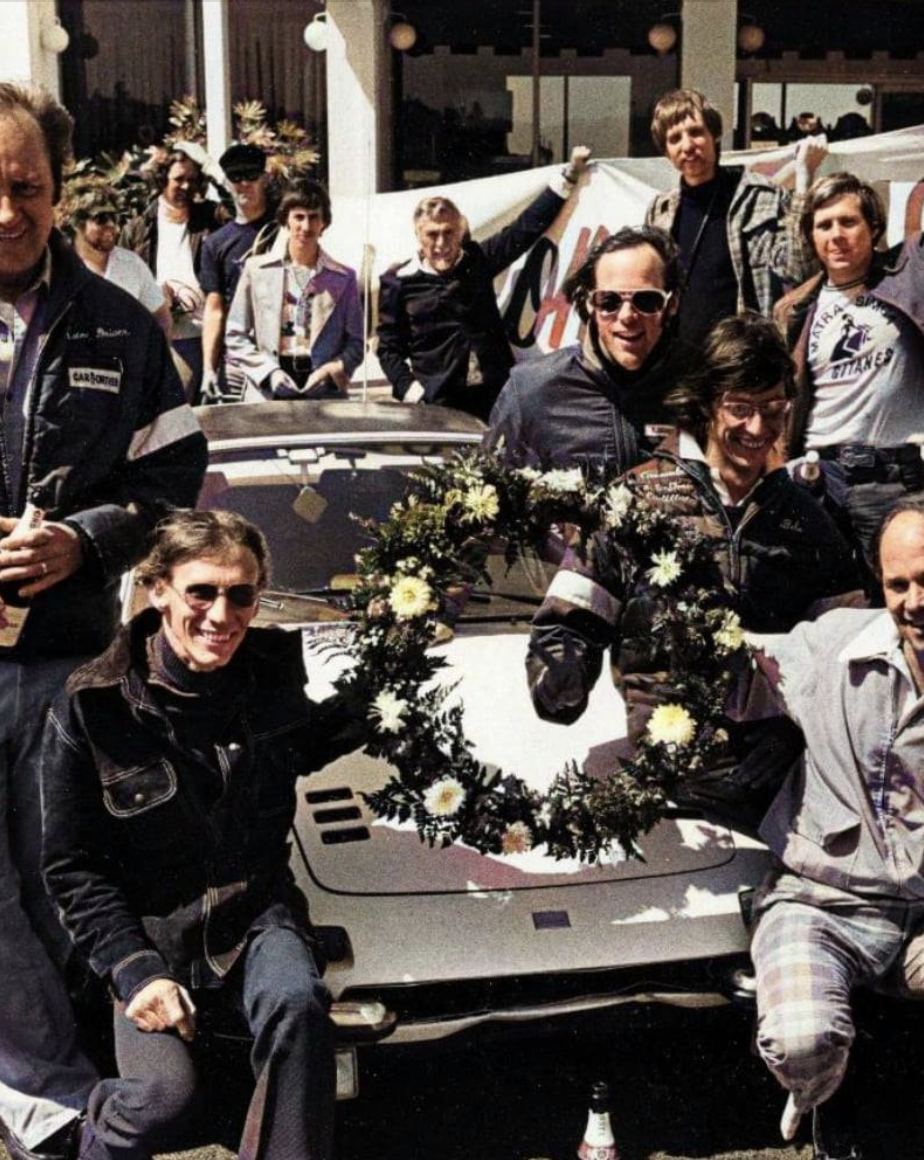
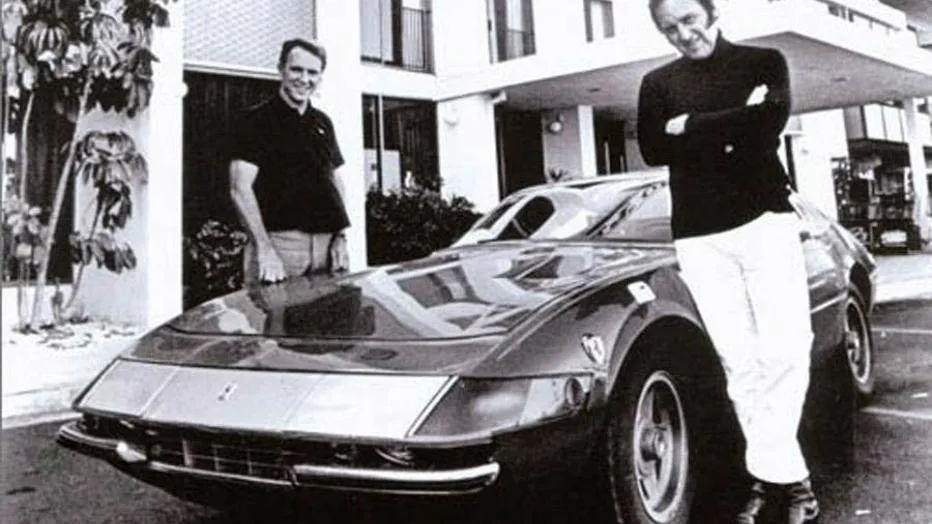
Time: 35 hours, 54 minutes
Vehicle: Ferrari 365 GTB/4 Daytona · 4.4L V12 · ~360 hp · 172 mph top speed
Date: November 15, 1971
Team: Dan Gurney (4x F1 winner, Le Mans winner), Brock Yates (creator/navigator)
Average Speed: ~80 mph across 2,863 miles
Fuel Economy: 12.2 mpg — highest of the 8 competitors. 29-gallon tank gave 300–350 mile range.
Historic Significance: THE ORIGINAL. Brock Yates created the Cannonball Baker Sea-to-Shining-Sea Memorial Trophy Dash, and this inaugural competitive run set the tone for everything that followed. Gurney drove the first 18 hours through terrible weather, at one point verifying the Daytona's top speed at an indicated 172 mph. Received a ticket in Arizona for 135 mph in a 70 zone.
Yates later wrote Cannonball Run and Smokey and the Bandit II, loosely based on these events.
Time: 53 hours, 30 minutes
Vehicle: Supercharged Graham-Paige Model 57
Date: 1933
Driver: Erwin "Cannonball" Baker (solo)
Historic Significance: Baker's most legendary automobile record — reportedly taking just one 30-minute rest stop on the entire coast-to-coast journey. This record stood for nearly 40 years until Brock Yates created the Cannonball Baker Sea-to-Shining-Sea Memorial Trophy Dash in Baker's honor in 1971.
Baker attempted 143 endurance records with motorcycles, cars, and trucks throughout his career, popularizing his guarantee to manufacturers: "no record, no money." He later became the first NASCAR Commissioner in 1947.
Vehicle: Stutz Bearcat
Route: San Diego to New York — Official Record Trip
Driver: Erwin "Cannonball" Baker (solo)
One of Baker's earliest automobile transcontinental runs. After earning his "Cannonball" nickname from a 1914 motorcycle record, Baker transitioned to cars and began setting records in vehicles from Stutz, Cadillac, Gardner, Ford, Franklin, and Graham-Paige — driving for dozens of manufacturers across three decades.
Baker's car records included a 1916 Cadillac run, a 1924 Gardner sedan (4 days 14 hours), a 1926 Ford Model T (5 days 2 hours), and a 1928 Franklin (69 hours 31 minutes) before his legendary 1933 mark.