Two SUVs. One Shadow.
Put these two vehicles side by side and the resemblance is immediate. Same general proportions. Same upright greenhouse. Same wide stance. Both white, both authoritative, both look like they belong at 90 mph on the highway and nobody thinks twice.
The Q7 V12 TDI shares the Explorer PIU's most valuable asset: it doesn't look fast, and it doesn't look suspicious. What it looks like is a large, purpose-built SUV driven by someone with somewhere important to be.
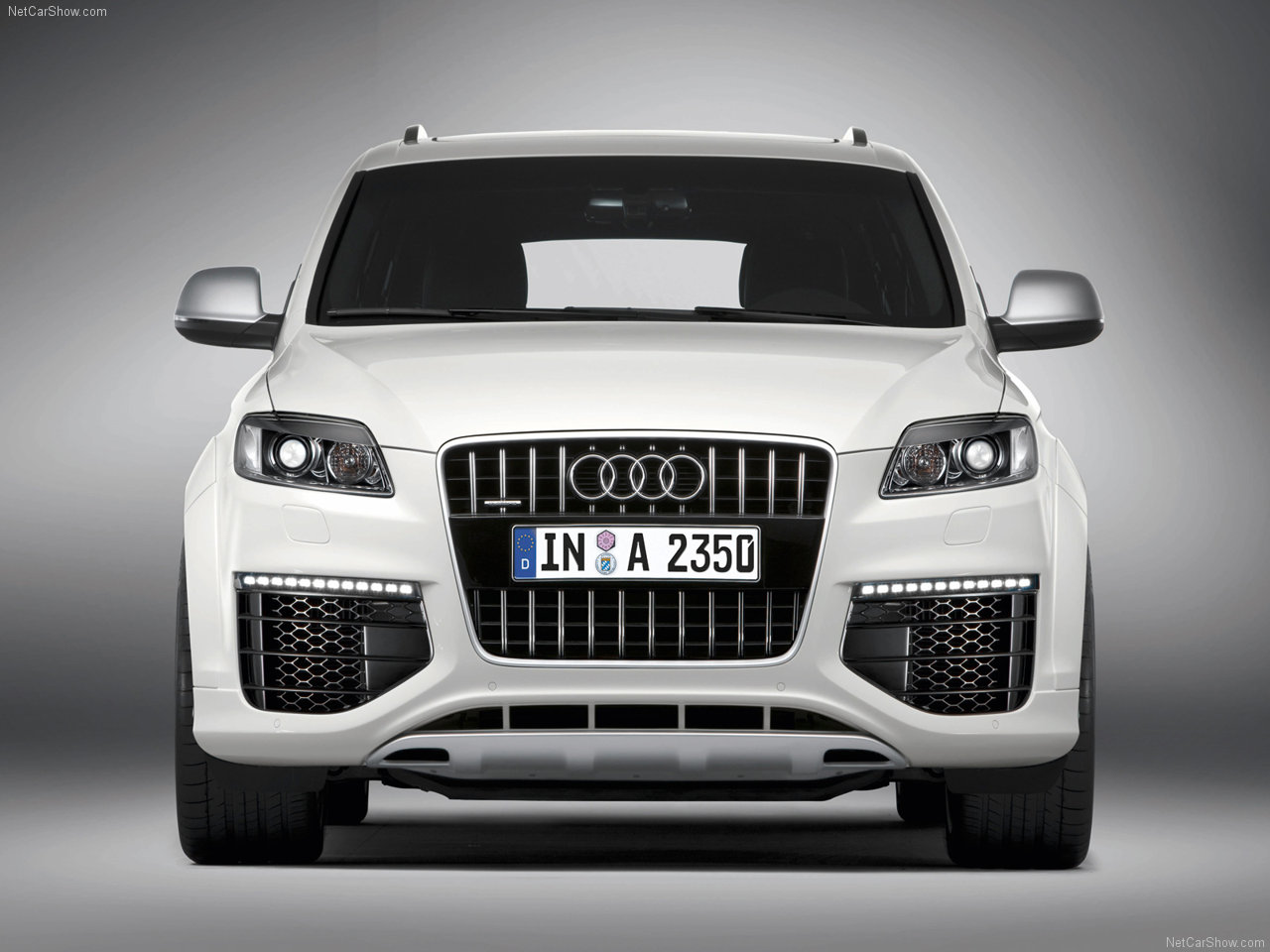
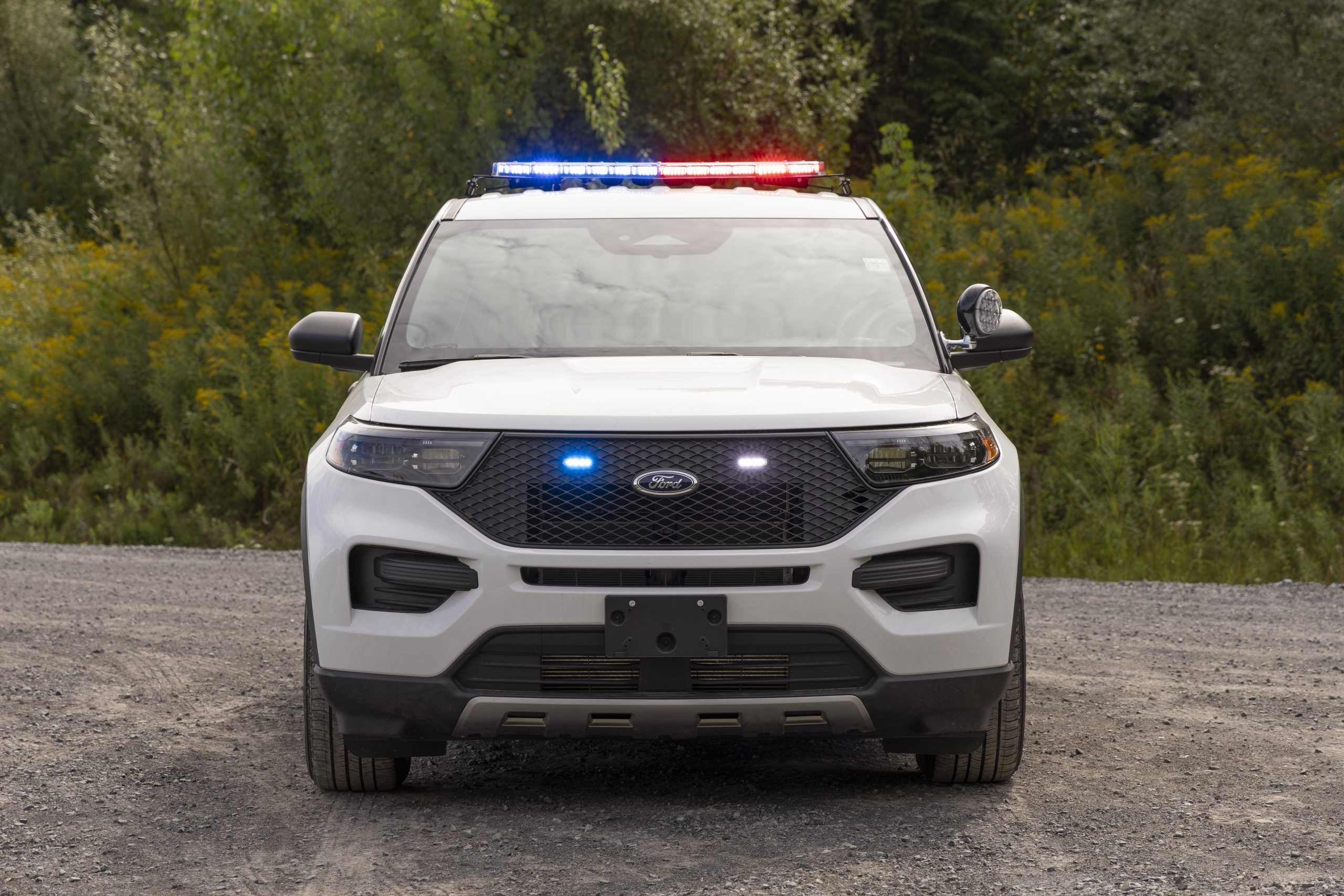
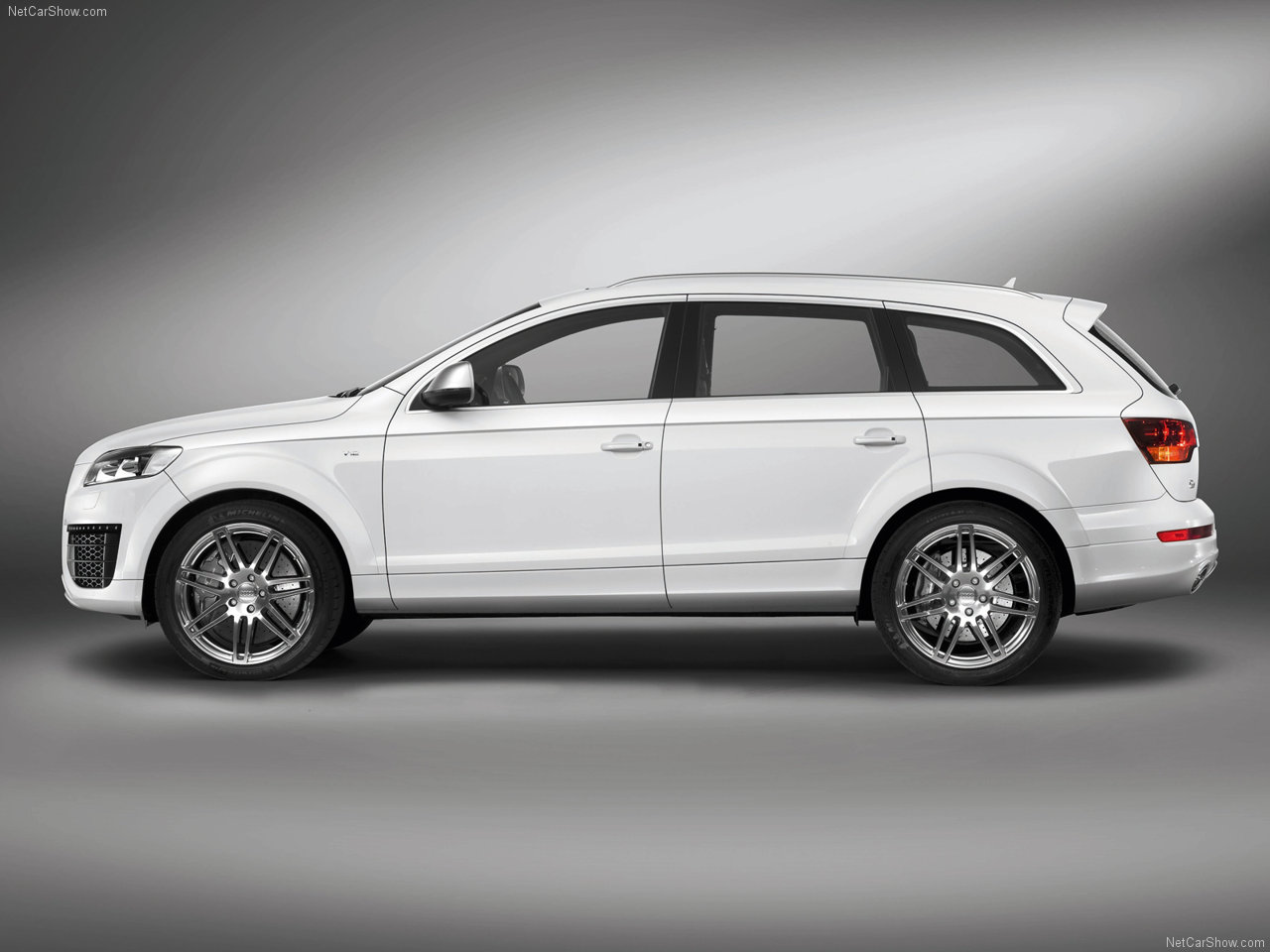
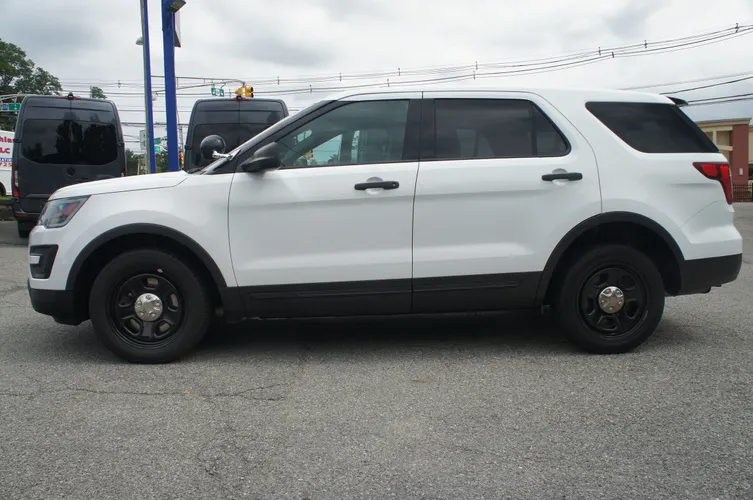
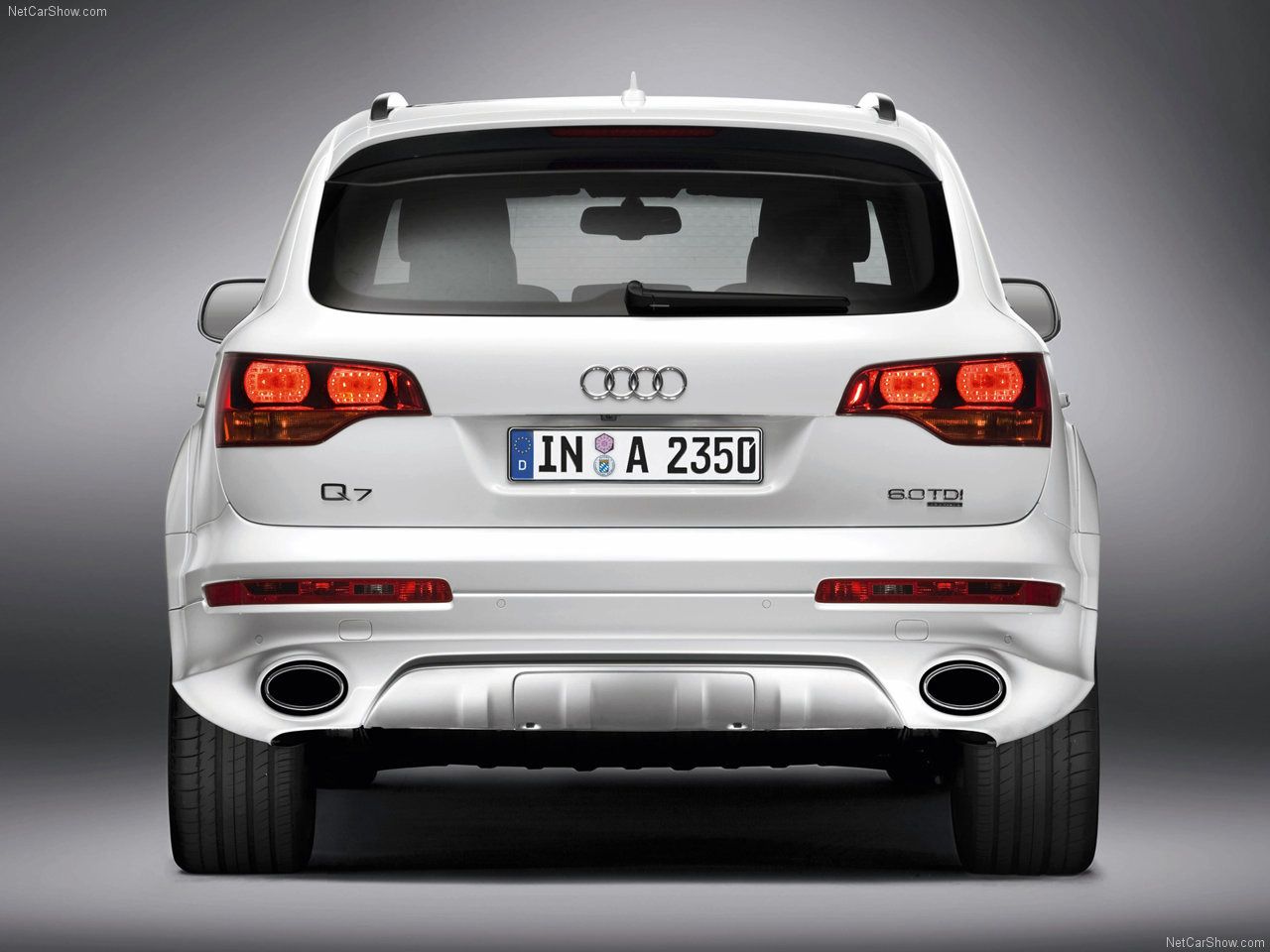
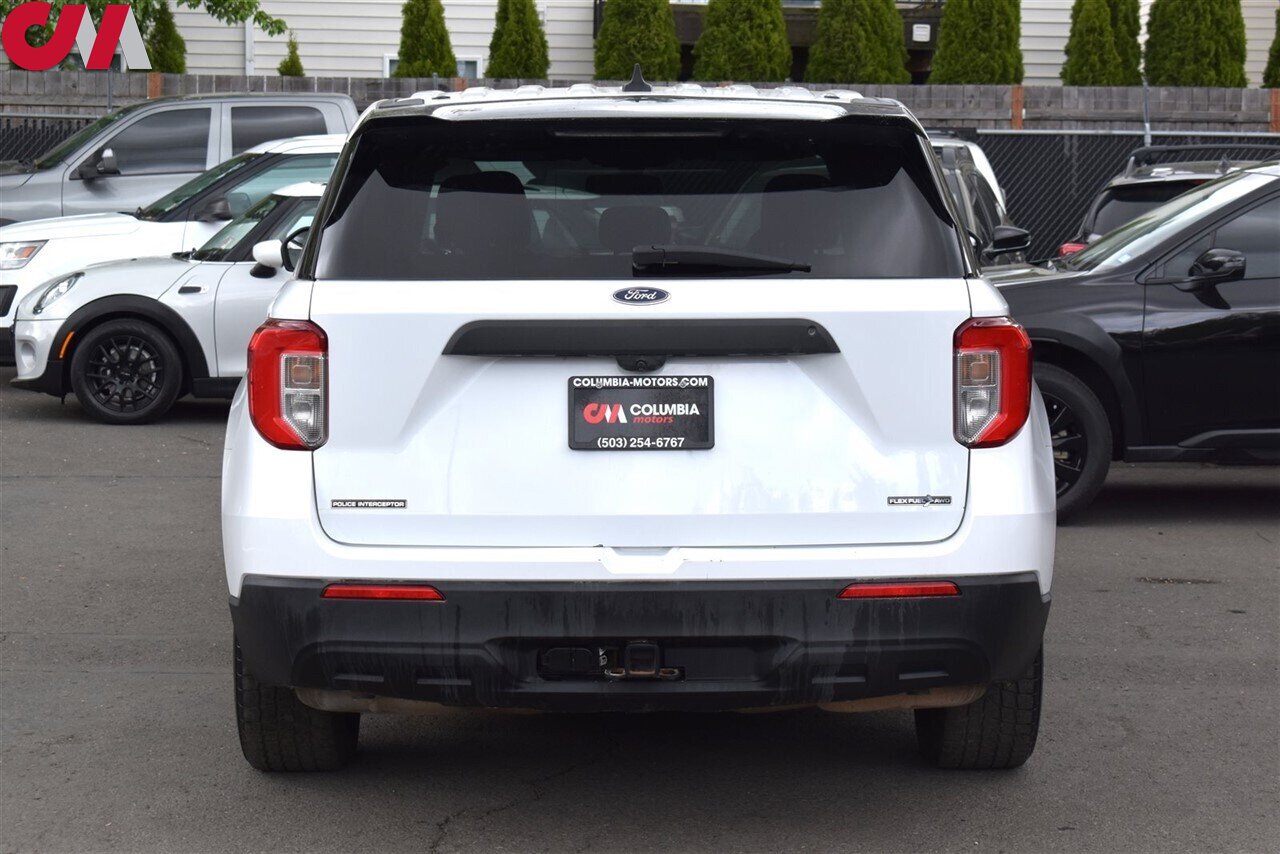
The visual overlap is the foundation of this thesis. At highway speed, in a rearview mirror, these two vehicles cast nearly the same shadow. The Q7's singleframe grille and LED running lights are more distinctive up close, but at distance and at speed, what registers is: big white SUV, wide stance, purposeful. That's all you need.
738 lb-ft of Torque. On Diesel.
The Audi Q7 V12 TDI is one of the most extreme production SUVs ever built. A 6.0-liter V12 turbodiesel producing 500 horsepower and an absurd 738 lb-ft of torque. For context, that's more torque than a Lamborghini Aventador. In an SUV. Running on diesel.
The Explorer PIU's 3.0L EcoBoost is a capable engine — 400 hp, 415 lb-ft. But the Q7's diesel V12 operates in a different universe of low-end thrust. The torque arrives at 1,750 rpm and stays flat through the entire midrange. On the highway, this translates to effortless, sustained high-speed cruising without the engine ever feeling stressed.
Diesel changes the fuel math entirely. At sustained highway speeds, diesel engines are 20–30% more fuel efficient than equivalent gasoline engines. The Q7 V12 TDI gets approximately 18–22 mpg at a steady 80–90 mph cruise — compared to the Explorer PIU's 12–14 mpg at the same speeds. Diesel fuel also has roughly 13% more energy per gallon than gasoline. When the mission is sustained high-speed distance, diesel isn't just an option. It's the correct answer.
155 vs. 148 — The Seven-MPH Gap
The Q7 V12 TDI is electronically limited to 155 mph (250 km/h). The Explorer PIU tops out at 148 mph. On paper, a 7 mph difference barely registers. In practice, for a sustained cross-country run, it matters more than it looks.
| Specification | Audi Q7 V12 TDI | Explorer PIU |
|---|---|---|
| Top Speed | 155 mph (250 km/h) | 148 mph (238 km/h) |
| 0–60 mph | 5.2 sec | 5.5 sec |
| Speed Limiter | ECU removable Common aftermarket ECU tune removes 250 km/h limit | Factory locked Police calibration; harder to modify |
| Sustained Cruise | 130+ mph comfortable Diesel torque keeps revs low at speed | 120–130 mph Gas V6 working harder at same speeds |
| Drivetrain | quattro Permanent AWD | Intelligent AWD |
| Transmission | 6-speed Tiptronic | 10-speed Auto |
But here's the real story. The Q7 V12 TDI's 250 km/h limiter is a software setting. European tuning houses have been removing it since 2009. Without the limiter, the aerodynamics and power curve suggest a true top speed around 170–175 mph. The Explorer PIU's 148 mph limit is baked into the police calibration and is significantly harder to modify.
More importantly, the diesel engine's torque curve rewards sustained speed. At 130 mph, the Q7's V12 is loafing at low RPM with massive torque reserve. The PIU's twin-turbo V6 is working significantly harder at the same speed. Over 2,800 miles, that difference in engine stress translates to reliability and fuel consumption.
With an ECU tune, the Q7 V12 TDI isn't just 7 mph faster. It's potentially 25+ mph faster. A de-limited Q7 with a performance tune could sustain 160+ mph on open highway. The Explorer can't answer that. For the sections of the run where top speed matters — the long empty stretches of I-40, I-15, I-70 — the Q7 has a ceiling the Explorer simply doesn't.
The Fuel Bladder Question
The Explorer PIU's killer feature is its massive flat cargo floor — roughly 52 cu ft behind the second row, with enough space to hide 100+ gallons of auxiliary fuel below the window line. Can the Q7 match it?
| Cargo Metric | Audi Q7 V12 TDI | Explorer PIU |
|---|---|---|
| Cargo (behind 2nd row) | 27.4 cu ft (775 L) | 52.0 cu ft |
| Cargo (seats folded) | 58.6 cu ft (1,658 L) | 52.0 cu ft (2-row config) |
| Stock Fuel Tank | 26.4 gal (100 L) | 21.4 gal (81 L) |
| Fuel Type | Diesel ~13% more energy per gallon | Gasoline |
| Est. MPG at Sustained Speed | 18–22 mpg At 80–90 mph cruise | 12–14 mpg At 80–90 mph cruise |
| Cargo Floor Shape | Flat, wide Wheel arches intrude slightly | Flat, wide, purpose-built Police config maximizes floor |
The PIU wins on raw cargo volume behind the second row — the police configuration deletes the third row and creates a vast flat floor. The Q7 in its standard configuration has a third row that eats into cargo space. But with the third row folded flat, the Q7 offers 58.6 cu ft of usable volume — more than enough for a serious fuel bladder setup.
But here's where the diesel advantage compounds. The Q7 V12 TDI starts with a larger stock tank (26.4 vs 21.4 gallons), burns fuel 40–50% more efficiently at sustained speed, and diesel itself contains more energy per gallon. The result:
Q7 V12 TDI Fuel Math
- Stock tank: 26.4 gallons
- Aux bladder (3rd row flat): ~80 gallons
- Total capacity: ~106 gallons diesel
- At 18 mpg sustained: ~1,908 miles range
- At 20 mpg sustained: ~2,120 miles range
Explorer PIU Fuel Math
- Stock tank: 21.4 gallons
- Aux bladder (cargo floor): ~117 gallons
- Total capacity: ~138 gallons gasoline
- At 13 mpg sustained: ~1,794 miles range
- At 14 mpg sustained: ~1,932 miles range
The Q7 achieves similar range with 30 fewer gallons of fuel. That's roughly 200 fewer pounds of liquid in the vehicle. Less weight means less strain on brakes, suspension, and tires over 2,800 miles. The PIU compensates for its thirst with raw volume. The Q7 compensates with efficiency. Both get you to roughly 1,900+ miles before stopping — but the Q7 does it while carrying less mass.
Size Comparison
Both are full-size SUVs with commanding road presence. The Q7 is slightly longer and wider — it was one of the largest SUVs in its class when new. The Explorer PIU is marginally shorter but rides on a similar wheelbase.
Side-by-Side Dimensions
The dimensions tell the story of why these two vehicles read the same at distance. Within 2 inches on length, within half an inch on width, within 1.5 inches on height. They are effectively the same size. The only significant difference is weight — the Q7 V12 TDI is a heavy vehicle, carrying that massive V12 diesel and quattro permanent AWD system. At 5,743 lbs before fuel, it's more than 1,200 lbs heavier than the PIU.
Weight is the Q7's biggest liability. 5,743 lbs is before you add a single gallon of auxiliary fuel. With an 80-gallon diesel bladder (diesel weighs ~7.1 lbs/gal), you're adding another 568 lbs. Total loaded weight approaches 6,300 lbs. That's hard on brakes, hard on tires, and affects handling at sustained speed. The Explorer PIU, even loaded with 117 gallons of gasoline (~725 lbs), comes in around 5,225 lbs — over a thousand pounds lighter.
Getting One Into America
The Audi Q7 V12 TDI was never sold in the United States. It was a European-only model, produced from 2008 to 2012. The V12 TDI engine didn't meet US emissions standards, and Audi never pursued EPA certification for it.
Under the US 25-year import rule (49 USC § 30112), vehicles older than 25 years are exempt from federal safety and emissions standards. That means the earliest Q7 V12 TDI models (2008) become legally importable in 2033. But there are workarounds:
Import Paths
- Show or Display exemption (NHTSA) — limited to 2,500 miles/year, which defeats the purpose
- EPA-certified conversion — a registered importer can modify the vehicle to meet emissions. Expensive ($10k–$30k+) but possible
- Canadian registration — Canada has a 15-year import rule, meaning 2008 models are already eligible. Register in Canada, run from a Canadian start point
- Wait for 2033 — the 25-year exemption makes 2008 models fully legal
PIU Availability
- Available at police auctions nationwide
- $30k–$45k for low-mileage 2020–2022 models
- No import, no conversion, no paperwork
- Parts and service at any Ford dealer
- Every mechanic in America knows the 3.0L EcoBoost
- Ready to run tomorrow
This is the Q7 V12 TDI's fundamental problem for an American Cannonball attempt. It's a vehicle that doesn't exist in this country. Every day spent on import logistics is a day the Explorer PIU is already on the road being prepped. The PIU is a phone call and a bank transfer. The Q7 V12 TDI is a project.
Complete Specification Table
| Category | Audi Q7 V12 TDI | Explorer PIU (3.0 EcoBoost) |
|---|---|---|
| Engine | 6.0L V12 Turbodiesel | 3.0L Twin-Turbo V6 (Gas) |
| Power | 500 hp @ 4,000 rpm | 400 hp @ 5,500 rpm |
| Torque | 738 lb-ft @ 1,750 rpm | 415 lb-ft @ 3,000 rpm |
| Top Speed | 155 mph (limited) | 148 mph (limited) |
| 0–60 mph | 5.2 sec | 5.5 sec |
| Fuel Tank | 26.4 gal (100 L) | 21.4 gal (81 L) |
| Fuel Type | Diesel | Gasoline (87+) |
| Est. Highway MPG (Cruise) | 18–22 mpg | 12–14 mpg |
| Cargo (behind 2nd row) | 27.4 cu ft | 52.0 cu ft |
| Cargo (max) | 58.6 cu ft | 52.0 cu ft |
| Curb Weight | 5,743 lbs | ~4,500 lbs |
| Drivetrain | quattro Permanent AWD | Intelligent AWD |
| Transmission | 6-speed Tiptronic | 10-speed Auto |
| Length | 200.3 in | 198.8 in |
| Width | 78.5 in | 78.9 in |
| Height | 68.4 in | 69.9 in |
| Wheelbase | 118.2 in | 119.1 in |
| Production Years | 2008–2012 | 2020–present |
| US Availability | Import only | Police auctions |
| Estimated Cost | €25k–45k + import | $30k–$45k |
Different Thesis, Same Shadow
The Explorer PIU thesis is about hiding in plain sight on American highways. Every cop, every driver, every camera sees an Explorer and processes it as normal. The vehicle is available, affordable, and ready to run.
The Q7 V12 TDI thesis is about raw capability wrapped in an innocent package. More power, more torque, better fuel efficiency, higher potential top speed, and a silhouette that reads as "just another SUV." The diesel advantage is real and measurable — it fundamentally changes the fuel math and the sustained-speed calculus.
But the Q7 carries burdens the Explorer doesn't. It weighs 1,200 lbs more. It's a 15-year-old European vehicle that needs importing. Parts and service are specialized. The 6-speed transmission is ancient compared to the PIU's 10-speed. And in America, an Audi Q7 doesn't trigger the same "that's a cop" reflex that an Explorer does.
The Q7 V12 TDI is the better machine.
The Explorer PIU is the better Cannonball car.
Unless the run starts in Canada — or the target is a European record like Nordkapp to Gibraltar — where the Q7's diesel advantage, higher speed capability, and European-market invisibility would make it the undisputed correct choice.